Departure for Europe
November 23, 1943, Virginia
 Richard's battalion - totaling some 660 men - on Nov 23. 1943 boarded in Virginia after a rigorous training. Richard's battalion - totaling some 660 men - on Nov 23. 1943 boarded in Virginia after a rigorous training.
Read the story: Resources >
Arriving in England
January 20 1944
 Jan 20. 1944 82nd 82nd Engineer Combat Battalion arrived in Liverpool, England. It would be six months before they saw action.
Read this story: Resources >
Landing at Omaha Beach
between 10th and 16th June, 1944
On June 6, 1944, D-Day, the Allied invasion of Europe began. The 82 Engineer Combat
Battalion landed in stages between 10 and 16 June, 1944 on Omaha Beach in Normandy. The intention was to rapidly push on to the rest of France, but the advance was slow.
Read the story: Combat route (1)>
Operation Cobra
end of July 1944, Saint-Lô
 end of July 1944, seven weeks after D-Day, the front had stagnated. Operation Cobra had to break the deadlock. 82 Engineer Combat Battalion was located around Saint-Lô, near the front. Richard Wells particpated fully in Operation Cobra.
Read the story: Combat route (1)>
Building bridges
August 1944, Meulan
 On August 7 Richard was in Vire, where he and his comrades initially constructed an (emergency) bridge. On August 26 they arrived in the town of Meulan and constructed a bridge over the Seine. Early September the 82 Engineer Combat Battalion went on to Belgium.
Read the story: Combat route (2)>
Died
September 9, 1944, Kesselt
 On September 9, 1944 Richard, with three others, was given the task of finding a suitable place for a temporary bridge across the Albert Canal. The Germans had blown up all the bridges. Their jeep was shot at between Kesselt and Veldwezelt, Richard was hit and died.
Read the story: Comabt route (3)>
July 1943 (?)
Registration ARC
September 1943
to the UK
July 16, 1944
Landing on Utah Beach
March 15, 1945
Siegfriedlinie
May 1, 1945
Died on pleasure flight
June 19, 1945
Buried in Margraten, Block RR, Row 12 Grave 290
February 18, 1943
Air Evac. Nurse diploma
Jan. 15, 1944
Married
July 26, 1943
Body washed up
March - Augus 1943
Panama
June 1944
To Europa
November 23, 1943
Departure for Europa
January 20, 1944
Arriving in England
June 1944
Landing Omaha Beach
US enters the war
December 11, 1941
Nazi Germany declares war on the US
Turnaround WWII
Februari 2, 1943
Battle of Stalingrad: Red Army defeats Germans

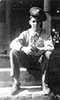
Richard Wells
A soldier's soldier
| Born: | May 14, 1924 |
| Location: | Cherry Creek, Chautauqua County, New York (de staat NY) |
| Family: |
|
| Education & profession: | When he was called up for the army in 1943, he had had three years of high school. |
| Military career: |
|
| Burial History: |
|
Richard F. Wells - A soldier’s soldier
It has been said that in WWII that for every active US soldier fighting at the front...
...there were ten men in support. Without these support forces - such as intelligence services, maintenance staff, nursing staff, freight drivers, etc. -. the war would never have been won.
Corporal Richard "Dick" F. Wells was part of such a key
supporting unit; he was assigned to 82nd Engineer Combat Battalion.
This task force followed immediately behind soldiers at the front.
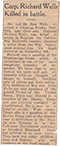
They were tasked with removing any obstacles and with building bridges. On September 9, 1944 Wells was part of a reconnaissance patrol along the Albert Canal. The jeep in which he was riding came under fire. Wells' passengers were taken prisoner by the Germans, but he himself was shot and was riddled with bullets. Richard Wells was 20 years old.
Growing up in Cherry Creek, Chautauqua County, New York
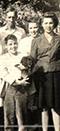
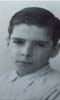
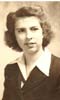
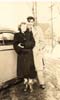
Richard "Dick" F. Wells was born in the small town of Cherry Creek, Chautauqua County in upstate New York. His father was Leroy C. Wells (ca 1892-1964) and his mother Julia M. Wachter Wells (1894-1957). Richard "Dick" was the fourth of 7 children: Donald (1919-1986), Doris (1921-2012), Edwin (1922-2006), Richard (1924-1944), Norman (1926-1982), Jean (1928- 2011) and Herbert (1930-2008). One baby was still born in 1917.
The father was farming in 1930, but in 1940 he was working in the steel industry, as was the eldest son Donald. The family lived at 487 Maple Avenue in Cherry Creek. His sister Jean, who was five years younger, remembered him later in life as a very happy child. On the way to school he used to sing his favorite song, Red River Valley.
Engineers
On February 1, 1943 Richard enlisted in the US army and served in the military engineers. At that time he was 19 years old and had had three years of high school.
Richard was assigned to 82nd Engineer Combat Battalion,
part of the front line troops.
The Combat Engineers served as a supporting task force
for their fellow comrades. The battalion was not supposed
to participate in the battle, but if needed they were fully equipped to do so. That was badly needed at the front. Their work was certainly not without risk...
The 82 Engineer Combat Battalion was set up in January 1943. The average age of the recruits was 22. Until May 1943 they were at Camp Swift in Texas engaged in basic training, with the emphasis on the general skills and knowledge a soldier needed.
From late May they started the Unit Training Program, where the focus was on engineering skills and team work. The main subjects covered were minefields and mine clearance, bridge building, laying roads and any problems you could encounter in war zones.
In August 1943 the battalion was ordered to gain some hands-on experience in Louisiana which involved repairing bridges and roads. In late August the battalion was ordered to prepare to be shipped overseas.
Richard was promoted to the rank of corporal and was Assistant Squad Foreman (Deputy section leader).
Boarded
Richard's battalion - totaling some 660 men - boarded in Virginia on
November 23, 1943. They had had 9 months of training.
Due to the the danger of torpedos from German U-boats their ship was part of a larger convoy of 65 merchant ships and 20 warships. The journey was uneventful. .
The intended destination was initially India, but plans changed. Via Oran in Algeria and Casablanca in Morocco, they traveled to England. On January 20, 1943, they arrived in Liverpool. From there they traveled through the county of Wiltshire, where they continued their training. from then it would be six months before the 82 Engineer Combat Battalion saw any action. That time was filled with exercises and preparations for the task that lay ahead.
A list of activities that sappers should perform in the war::
|
To Paris
On June 6, 1944 - D-Day - the Allied invasion of Europe began.
HThe 82 Engineer Combat Battalion landed in stages between 10 and
June 16, 1944 at Omaha Beach in Normandy. The purpose of the
Allied high command was to quickly advance from Normandy to the rest of France. The reality proved more difficult. The advance was slow as the terrain in Normandy made it very difficult for the allies to move quickly.
Seven weeks after D-Day the advance stalled and the Allies had made little progress. The army commanders realized that they needed to break the deadlock. Operation Cobra had to be the answer.
In the last days of July, the Allies waged a massive offensive on the German defenses. And with success. Within a few days there was a breakthrough and the allied army could finally start to advance furher.
In late July the 82 Engineer Combat Battalion was located around Saint-Lô, near the front. Richard Wells took part in Operation Cobra at close range and so experience it at close range. On August 17 he was in Saint-Lô which had been completely destroyed, but on August 15 he had been in Vire. He and and his comrades had constraucted an (emergency) bridge.
The road to Paris was now open and the Allies could now advance more swiftly. Around August 19 the first troops reached the Seine. Richard probably arrived on August 26.
On that day,the 82 Engineer Combat Battalion constructed a bridge
over the river at the town of Meulan.
The next day the battalion stayed northwest of Paris.
Early September they were onthe move again. Through Gembloux in the province of Namur they arrived in Alken near Hasselt. Brussels and Antwerp had by then been liberated (September 5), Liege (September 6) and Verviers (7 September).
Killed during a patrol
On September 8 the 82nd Engineer Combat Battalion was in Alken - south of Hasselt. That day the battalion marched towards Riemst in order to rest for the night.
The next morning - September 9 - Commander John R. Davies sent four of his men - including Richard Wells - on a reconnaissance patrol to find a suitable place near Hasselt to build a temporary bridge which would cross over the Albert Canal. Besides Richard, who was driving the jeep, there was Lieutenant Edward J. Fairchild and soldiers William E. Ash and Lawrence P. Chemeski as part of the patrol.
The inspection was necessary because the retreating German troops had blown up all the bridges in the area of Vroenhoven the day before. Veldwezelt and Briegden. The Albert Canal was very deep in places which made it difficult to find a suitable place to build a bridge. So a thorough inspection was necessary.
While the jeep was heading from Kesselt to Veldwezelt fate struck. The jeep was fired on from two sides by remaining German soldiers who had been ordered to prevent the Americans crossing the canal.
The four men were heavily attacked and Richard was hit
by several bullets in his stomach and his legs, while Fairchild
Ash and Chemeski took cover. Richard was already dying
when his three companions decide to surrender.
The Germans laid Richard's body on the sidewalk near the Vanham family's house. When the family heard loud bangs, they opened the door and found the lifeless body of Wells. They also saw that the three others had been taken prisoner (they spent the rest of the war in German camps.)
According to Corry Vanham, Wells's body was then taken to the local church, where he was washed by the nuns. Several people came to see what had happened. Not much later, the Americans came and took Wells' body.
Bill Hammond 82 Engineer Combat Battalion was one of them. He remembered Richard Wells as follows: "Whenever I think of Corporal Wells, I cry. Dick was a fine soldier. Nothing was too much for him. Always ready. "He was a soldier's soldier". Hammond remembers that Wells' body was not in the church but was laid out on a wooden table in a barn.
While the body was being recovered and the jeep was being towed away, the engineers were again under fire from the Germans. A US tank attacked the German positionhas their position, after which the German defenses were broken.
On September 11 the Germans retreated back across the river, and on 12th September the liberation of Limburg began.
Emergency Bridges
Although Richard was no longer alive to see it, it is interesting to
note days after his death, the American engineers from
82 Engineer Combat Battalion constructed bridges over the Albert
Canal and the Meuse.
For them it was impossible at that time to repair the existing bridges at Vroenhoven, Veldwezelt and Briegden because of the depth of the channel.
It was therefore necessary to look for a place where the canal was much shallower. First they constructed a (temporary) pedestrian bridge on September 12 at Nivelles (B) Low Caestert / Eijsden (NL) just north of the farm 'The Muggenhof. A floating pontoon bridge was built and finally a heavy Bailey Bridge .
The most suitable place to build a Bailey bridge across the Albert Canal was in Kanne. Bailey bridges were assembled on shore and then slid over the water. Their first attempt failed. The bridge sagged and ended up in the water. For a second attempt a ship was used as a support. This is a beautiful painting made by Henry J. MacMillan. This attempt succeeded.
Memories
Richard F. Wells died on September 9, 20 years old. Twenty days later - on September 29 - his parents received a telegram of condolence. The message would have hit the family hard.
At that time, there were five members of the family in the service of the army:
Donald had fought in the Pacific and was seriously wounded at
Guadalcanal. At the time Richard's death, Donald was in a
hospital on the West Coast. Brother Edwin was still somewhere
in the Pacific. Norman was stationed in Maryland, where he worked for the Ordnance Department, which supplied the army. Sister Doris served in the army as a nurse.
Richard, however, is ultimately the only one of the siblings who died in battle. He was decorated with the Purple Heart.
The Wells family decided to let Richard be buried at Margraten near the spot where he was killed. His grave is located in Block J, Row 6, Grave 6.