Voorbereiding in Engeland
Sept. 1943 t/m juni 1944
 In september 1943 werd de gehele 101 Airborne Division naar Vliegveld Greenham
Common, Newbury, Berkshire in Engeland gestuurd om zich voor te bereiden op de invasie van Europa. Aan de vooravond van D-Day leidde Cole zijn goede vriend generaal Dwight D. Eisenhower rond.
In september 1943 werd de gehele 101 Airborne Division naar Vliegveld Greenham
Common, Newbury, Berkshire in Engeland gestuurd om zich voor te bereiden op de invasie van Europa. Aan de vooravond van D-Day leidde Cole zijn goede vriend generaal Dwight D. Eisenhower rond.
Lees het hele verhaal bij Marsroute (1) >
D-Day
Utah Beach, 6 juni 1944
 Op D-Day had Cole als luitenant-kolonel het commando over het 3e bataljon van het 502
Parachute Infantry Regiment, 101 Airborne Division. In de vroege uren van 6 juni werden ca. 13.000 paratroopers vlak achter de Duitse verdedigingslinies langs de kust gedropt.
Op D-Day had Cole als luitenant-kolonel het commando over het 3e bataljon van het 502
Parachute Infantry Regiment, 101 Airborne Division. In de vroege uren van 6 juni werden ca. 13.000 paratroopers vlak achter de Duitse verdedigingslinies langs de kust gedropt.
Lees het hele verhaal bij Marsroute (2) >
Cole’s charge
Carentan, 11 juni 1944
 101 Airborne Division moest oprukken naar het strategisch gelegen Carentan. Daarvoor
moest 502 PIR vier bruggen oversteken onder constant voor van Duitse troepen. Cole en zijn mannen bereikten de
verdedigingslinies en overmeesterden de Duitsers. Maar de verliezen waren enorm.
101 Airborne Division moest oprukken naar het strategisch gelegen Carentan. Daarvoor
moest 502 PIR vier bruggen oversteken onder constant voor van Duitse troepen. Cole en zijn mannen bereikten de
verdedigingslinies en overmeesterden de Duitsers. Maar de verliezen waren enorm.
Lees het hele verhaal bij Marsroute (3) >
Terug naar Engeland
Juli - september 1944
 In juli 1944 keerde 101 Airborne Division terug naar vliegveld Greenham Common in
Engeland. Eerst om tot rust te komen, en daarna om zich onder leiding van Robert binnen korte tijd klaar te maken voor Operatie Market Garden.
In juli 1944 keerde 101 Airborne Division terug naar vliegveld Greenham Common in
Engeland. Eerst om tot rust te komen, en daarna om zich onder leiding van Robert binnen korte tijd klaar te maken voor Operatie Market Garden.
Lees het hele verhaal bij Marsroute (4) >
Operatie Market Garden
Son, 17 september 1944
 Op 17 sept .1944 ging de grootste luchtlandingsoperatie ooit van start: Operatie Market Garden. Die dag sprongen er 41.628 paratroopers. 502 PIR werd gedropt bij Son en moest o.a. een brug over het Wilhelminakanaal innemen in Best. Hun taak was de drop zone te beveiligen.
Lees het hele verhaal bij Marsroute (5) >
Gesneuveld
Best, 19 september 1944
 Cole besloot om na een noodoproep het H-bataljon rond Best te hulp te schieten. Hij
riep de hulp in van P-47 Thunderbolt jachtvliegtuigen. Maar die begonnen per abuis op Amerikaanse stellingen te schieten. Toen Cole een herkennings- baken wilde plaatsen werd hij in zijn slaap geraakt door Duits vuur.
Cole besloot om na een noodoproep het H-bataljon rond Best te hulp te schieten. Hij
riep de hulp in van P-47 Thunderbolt jachtvliegtuigen. Maar die begonnen per abuis op Amerikaanse stellingen te schieten. Toen Cole een herkennings- baken wilde plaatsen werd hij in zijn slaap geraakt door Duits vuur.
Lees het hele verhaal bij Marsroute (6) >
July 1943 (?)
Registration ARC
September 1943
to the UK
July 16, 1944
Landing on Utah Beach
March 15, 1945
Siegfriedlinie
May 1, 1945
Died on pleasure flight
June 19, 1945
Buried in Margraten, Block RR, Row 12 Grave 290
February 18, 1943
Air Evac. Nurse diploma
Jan. 15, 1944
Married
July 26, 1943
Body washed up
March - Augus 1943
Panama
June 1944
To Europa
November 23, 1943
Departure for Europa
January 20, 1944
Arriving in England
June 1944
Landing Omaha Beach
US enters the war
December 11, 1941
Nazi Germany declares war on the US
Turnaround WWII
Februari 2, 1943
Battle of Stalingrad: Red Army defeats Germans

Robert Cole
The Medal of Honor Hero
| Born: | March 19,1915 |
| Location: | San Antonio, Texas |
| Family: |
|
| Education & job: | High School diploma in 1933, then a professional soldier |
| Military career: |
|
| Burial History: |
|
Lieutenant Colonel Robert G. Cole was a paratrooper with 101st
Airborne Division, the division of the legendary men of the
Band-of-Brothers.
He took part in both the airborne landings on D-Day and in
Operation Market Garden. In the days following D-Day he led his
men through the heavily defended Normandy coast land. He was honored for an attack on four Germans occupied bridges (hereafter referred to as Cole's charge) and was awarded the highest US military decoration, the Medal of Honor. On September 18, 1944 - the 2nd day of Operation Market Garden – he was killed near Best. Robert Cole was 29 years old.
Grew up in San Antonio, Texas
Robert George Cole was born on March 19, 1915 in San Antonio, Texas. His parents were Colonel Clarence F. Cole and Cole Clara Hoff. Robert - or 'Bob' - was the middle of three children. He had a brother Leroy who was three years older and a sister Mary Elizabeth who was three years younger. Cole's father was an army doctor. Robert's mother was a teacher.
As a boy, Robert attended Jefferson High School San Antonio. In 1933 he finished High School along with his childhood sweetheart, Allie Mae Wilson, whom he would marry in 1939.
Becoming a professional soldier
The vast majority of the American soldiers who fought in the Second World War joined the military just before or even during the war were either conscripts or they signed up as a volunteer..
That was not the case with Robert Cole. In 1934, a year after
graduating High School, he enlisted in the US Army.
His father was undoubtedly an important role model for him.
It was the beginning of a 10-year career as a professional soldier.
After Robert's first year of training, he had shown that he had the capability to become an officer, and was accepted into the prestigious United States Military Academy at West Point.
This military academy - commonly referred to as "West Point" - is located along the Hudson River just north of New York. It is the oldest US Military Academy, founded in 1802 by former President Thomas Jefferson. Famous military men who studied there were Generals Dwight D. Eisenhower, Douglas MacArthur, Omar Bradley and George Patton.
Robert Cole was thus in good company when he graduated on June 12, 1939. On graduating, he was made second lieutenant. Shortly afterwards he married his childhood sweetheart Allie Mae Wilson.
His first military appointment was at 15 Infantry Regiment Here he got to know Dwight D. Eisenhower - the future commander of the Allied armies (and later the 34th president of the United States). In the period March - November 1940 Eisenhower was commander of the 1st Battalion, 15 Infantry Regiment. Cole en Eisenhower became good friends during this period.
On September 9, 1940 Robert was promoted to first lieutenant.
Paratroopers
In early 1941 Paratrooper Robert volunteered for
jump school at Fort Benning, Georgia, in 1941.
He wanted to become a paratrooper. He started his training
at Jump School – probably in February.
To be a paratrooper meant a lot. Everyone knew that the training was very tough, both physically and mentally. Only half of the recruits who started training, completed the course.
Jump School lasted 4 weeks: week A, B, C and D. Week A separated the wheat from the chaff due to the almost impossible arduous physical training such as rope climbing, push-ups, long marches, judo, hand to hand combat, etc.
Week B focused on skydiving: how to jump from a plane, how to steer in the air and how to land safely. The physical training was even more challenging.
During week C the men were taught how to pack their parachutes and the first jumps were made from towers of 9 meters and 76 meters high. Most men dropped out of the training during week A and B, and also some men dropped out in week C due to these difficult jumps.
In week D the physical training continued and the first real jumps from an airplane were made. Anyone who managed to complete this grueling four-week training automatically got his jump wings (paratroopers license). Robert earned his in 1941. He was part of one of the best military units of the US Army, an elite team. He was a paratrooper.
After earning his jump wings he was assigned to
501 Parachute Battalion. On February 1, 1942, he made a career
move again: he was promoted to captain and transferred to the
new 502 Parachute Battalion. A little over a year after he was
promoted: on October 13, 1942 he was made a Major
and on May 29, 1943 he was promoted to Lieutenant Colonel. By now he had become (on March 2, 1943), commander of the 3rd Battalion, 502 Parachute Infantry Regiment, for short 502 PIR.
502 PIR, 101 Airborne Division
The story of the paratroopers van 101 Airborne Division The story of the paratroopers of 101 Airborne Division made them world famous following the success of the book by the late war historian Stephen E. Ambrose and the TV series Band of Brothers. In the first episode of the series you can see how the men of E Company are ruthlessly trained by their Captain Herbert Sobel.
Robert Cole served in a different regiment, the story of E Company is the same story as that of 502 PIR. (E-Compagny was part of 506 PIR, while Cole commander of 502 PIR). Robert Cole had the same experiences as the men in the Band of Brothers.
To war
In September 1943 the complete 101 Airborne Division was sent to England to prepare for the invasion of Europe. In retrospect they had at that time still nine months to go before their fight would actually begin.
On March 19, 1944 Robert celebrated his 29th birthday
in England (see a photograph from that festive occasion,
which has been preserved, with Robert holding a big piece
of birthday cake).
All the attention and energy was around that time, in early 1944, focused on the readiness of the troops for the invasion of the continent. Just before the big day - D-Day – General Dwight D. Eisenhower, a close friend of Robert Cole's and now commander of the Allied Forces, visited the airfield where 101 Airborne Division were ready to leave. Robert personally gave Eisenhower a tour of the base.
D-Day
On June 6, 1944 - D-Day - Robert Cole was a lieutenant colonel in command of the 3rd Battalion of the 502 Parachute Infantry Regiment, 101 Airborne Division. That day his unit encountered the fight for the first time.
In the early hours of June 6 approximately 13,000paratroopers of the US 82 Airborne Division and 101 Airborne Division and the British 6 Airborne Division were dropped from gliders and landed along the Normandy coast behind the German defenses. It was the largest airborne operation ever.
101 Airborne Division was assigned to take the approaches to Utah Beach so 4 Infantry Division, once they had the beach behind them, they could quickly advance. In addition, 101 Airborne Division was ordered to take out a German artillery battery at Saint-Martin-de-Varreville and to take the bridges over the Douve River.
Although the paratroopers were scatterd as they landed, Cole
managed to get his men together, and they achieved their
objectives. The toughest mission was yet to come...
Cole’s charge
After the successful jump on D-Day, 101 Airborne Division went on to fight as infantry. June 10 - D-Day +4 - they were ordered to march to the strategically located Carentan. By taking Carentan, Omaha Beach and Utah Beach would be joined up.
To leave their position, 502 PIR had four bridges to cross. (Carentan is located in a wetland). In addition, they were constantly under fire from German troops. The Germans had waterlogged all the fields around, so there was hardly any protection for the advancing Americans. Many soldiers were killed. The road was later nicknamed Purple Heart Lane. Of the 400 men who attempted to cross the four bridges, only 265 reached the other side...
In the early hours of June 11, when the 3rd Battalion of 52 PIR led by Robert Cole, had crossed the last bridge, they were again under fire from Germans who had entrenched themselves in and around the farm. Cole realized that there was only one way out of the impasse: attack and make the best of it. He ordered his men to fix bayonets. After supporting artillery had erected a smokescreen for some coverage, he continued the attack towards the German defense. Cole himself went first, followed slowly by more men. This action has gone down in history as Cole’s Charge.
Cole and his men managed to reach the German defenses
and to eventually overpower the Germans eventually overpower.
But the losses were enormous: half the paratroopers were killed.
Within one day 502 PIR lost 270 men, an incomprehensible
loss of 62.5%. Of the 400 men that Colehad started out with the
day before, only about 130 were still with him at the end of June 11, 1944.
However tragic it was, from a strategic point of view his action proved decisive: the German were defeated by the US forces, who were able to occupy a base on the outskirts of Carentan, from where they could attack the town.
Medal of Honor
Robert Cole later received the Medal of Honor for this action. The award certificate states:
Lt. Col. Cole was personally leading his battalion in forcing the last 4 bridges on the road to Carentan when his entire unit was suddenly pinned to the ground by intense and withering enemy rifle, machinegun, mortar, and artillery fire placed upon them from well-prepared and heavily fortified positions within 150 yards of the foremost elements.
After the devastating and unceasing enemy fire had for over 1 hour prevented any move and inflicted numerous casualties, Lt. Col. Cole, observing this almost hopeless situation, courageously issued orders to assault the enemy positions with fixed bayonets.
With utter disregard for his own safety and completely ignoring the
enemy fire, he rose to his feet in front of his battalion and with drawn
pistol shouted to his men to follow him in the assault. Catching up a
fallen man's rifle and bayonet, he charged on and led the remnants of
his battalion across the bullet-swept open ground and into the enemy
position.
His heroic and valiant action in so inspiring his men resulted in the complete establishment of our bridgehead across the Douve River. The cool fearlessness, personal bravery, and outstanding leadership displayed by Lt. Col. Cole reflect great credit upon himself and are worthy of the highest praise in the military service.
Unfortunately, Robert would never personally accept the distinction, as he had died by this time, as we shall see later.
Preparing for a new mission
On June 29, 101 Airborne Division was relieved by the 83rd Infantry Division and the "Screaming Eagles" left for Cherbourg. From here, the division returned in mid-July to England. First to unwind, and then to get ready for the next operation. It is known that Robert Cole ruled his battalion with an iron fist. After receiving reinforcements his men were ready for a new challenge.
During September the new challenge came - Operation Market Garden. At the end of the summer the allied troops had made good progress in their advance. Everyone hoped that the war would be over before Christmas, but at the current rate of progress this was not possible.
So the British Field Marshal Bernard Law Montgomery proposed a bold plan: if they managed to create a corridor from Belgium to the IJsselmeer, the German troops would be sealed off in the western Netherlands, then the Allies could push through to the German Ruhr area - the heart of the German war industry. That would be an enormous setback for the Germans, that could soon decide the outcome of the war. Despite criticism of his other generals, Commander Dwight D. Eisenhower decided to give the plan a chance.
Crucial to its success was that the Germans would not blow up the bridges over the Maas, Waal and Lower Rhine at Arnhem during their retreat. That would prevent a speedy advance. The paratroopers of 82nd and 101st Airborne Division were given the task to prevent this from happening. They would be dropped between Eindhoven, Nijmegen and Arnhem and were to take roads and bridges and to occupy important junctions. This would give the British ground forces a corridor so that they could quickly advance.
Operation Market Garden
Operation Market Garden Operation Market Garden was launched on 17 September 1944. This was an airborne operation (and to date) the largest airborne operation ever: that day a whopping 41 628paratroopers jumped. Unlike D-Day they jumped during the day, so the paratroopers - unlike D-Day - could regroup and advance quickly.
The men of 101 Airborne Division were dropped between Eindhoven and Veghel and were tasked with taking several bridges, roads and towns. 502 PIR was dropped at Son and were to take a bridge over the Wilhelmina Canal in Best.
Robert Cole's first task was to secure the drop zone – so that troops later in the day and the following days could land safely. It all went according to plan. The next day, on September 18th, Cole received a message that H-battalion was in trouble near Best, and he decided to go to their aid.
He moved into the forest area between Son (in the east) and Best (in the west). There was fierce German resistance, which cost the life of Joe Mann, who when already wounded, had thrown a grenade to try and save his comrades. Mann received a posthumous Medal of Honor for this action. (Robert Cole and Joe Mann are the only two from of 502 PIR to receive a Medal of Honor.)
Robert Cole was killed
When he found the H-battalion, they were heavily under fire from German artillery. The situation seemed the same as in Carentan: they could not go anywhere and the Germans clearly had the upper hand.
He decided to seek help from the P-47 Thunderbolt fighter planes, who were supporting the landing of Allied gliders. The Thunderbolts answered the call and flew toward the position of Cole's battalion.
But instead of firing on the German positions, they fired on their own troops. Cole was furious and ordered his men to set up Air Recognition Panels - orange identification markers - and to place around their positions, so that the fighter pilots knew they were firing on their own troops.
When his men did not respond quickly enough,Robert Cole decided to do it himself. He ran into the open field to place the markers. The fighter pilots saw them and began shooting at the Germans.
Robert Cole stood with his hand over his eyes to shield them from the sun so that he could watch the planes. That moment was fatal. As he looked up he was hit by a shot from a German rifle. He died on the spot. Robert Cole's death was the biggest setback 502 PIR had to endure during the war. You could not think of a better battalion commander than Cole.
Awards
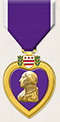
For his heroic deeds Robert Cole received the Medal of Honor, the Purple Heart and the French Croix de Guerre award.
Two weeks after his death at Best, Robert Cole was posthumously awarded the Medal of Honor for his actions near Carentan on June 11, 1944. The medal was presented to his wife and their two-year old son at Fort Sam Houston, Texas.
Memories
When General Eisenhower heard that Robert Cole had been
killed, he sent Cole's widow Allie Mae a personal letter of
condolence, dated March 8, 1945, which states:
“Dear Mrs. Cole,
I only recently learned that your husband lost his life during the airborne operations last fall. Although I do not want to remind you of this tragic loss, I admired him so much that I still wanted to send you an expression of my sympathy and regret.
He was one of our best and certainly one of our bravest officers. He was unanimously loved and respected by his colleagues. Of course, I particularly got to know him through our former collaboration with 15th Infantry.
I hope the knowledge of his prowess and his invaluable services to his country, bring some comfort to you, even if it can not reduce your pain..
With heartfelt condolences,
Dwight D. Eisenhower.”
After his death, Robert Cole was buried in Margraten. He found his final resting place in Block B, Row 15, Grave 27. On September 18, 2009 a monument was unveiled in Best, near the spot where he was killed.