
ASTP training program
August 11, 1943
 Despite his humble background Leo was admitted to the prestigious Army
Specialized Training Program (ASTP) in July 1943. This initiative of the US military offered the brightest young men (with an IQ of at least 120), the opportunity to train as engineers, doctors or interpreters. Read the whole story at Overview>
Despite his humble background Leo was admitted to the prestigious Army
Specialized Training Program (ASTP) in July 1943. This initiative of the US military offered the brightest young men (with an IQ of at least 120), the opportunity to train as engineers, doctors or interpreters. Read the whole story at Overview>
Read the whole story at > Overview >
Emergency Infantryman
February 1944
 Due to a shortage of soldiers the army decided to discontinue the program in which Leo was enrolled in Feb '44. 110,000 young ASTP students swapped the university for direct participation in the war. Most were sent to infantry units as a soldier 1st class. Including Leo.
Read the story: Military file >
In the War
Winchester, October 1, 1944
 On September 20, 1944 Leo with the 334 Infantry Regiment boarded the USAT Thomas H. Barry in Brooklyn. On Oct 1. They arrived in England and were stationed near Winchester. Between 1 and 4 Nov. 84 Infantry Division landed at ‘Omaha’ Beach traveled to the front..
Read the story: Combat Route (1) >
Operation Clipper
Gulpen, November 9, 1944
 On November 9 84 Infantry Division arrived near Gulpen, South Limburg. On Nov 17. the division was moved to the front, just east of the Dutch-German border. They would be deployed during Operation Clipper. Purpose: to break through the Siegfriedlinie.
Read the story: Combat Route (2) >
Leo was killed
Prummern, November 20 1944
 On November 20 Leo's company was tasked with taking the German bunkers at Mahogany Hill. The attack of 84 Infantry Division was immediately answered with lethal German machine-gun fire. During this attack Leo Lichten was fatally hit.
Read the whole story > Combat Route (3)
July 1943 (?)
Registration ARC
September 1943
to the UK
July 16, 1944
Landing on Utah Beach
March 15, 1945
Siegfriedlinie
May 1, 1945
Died on pleasure flight
June 19, 1945
Buried in Margraten, Block RR, Row 12 Grave 290
February 18, 1943
Air Evac. Nurse diploma
Jan. 15, 1944
Married
July 26, 1943
Body washed up
March - Augus 1943
Panama
June 1944
To Europa
November 23, 1943
Departure for Europa
January 20, 1944
Arriving in England
June 1944
Landing Omaha Beach
US enters the war
December 11, 1941
Nazi Germany declares war on the US
Turnaround WWII
Februari 2, 1943
Battle of Stalingrad: Red Army defeats Germans

Leo Lichten
Highly Trained Cannon Feed
| Born: | May 31, 1925 |
| Location: | New York City, New York |
| Familie: |
|
| Education & profession: | Aug ‘43- feb ’44: Army Specialized Training Program (ASTP) |
| Military career: |
|
| Burial History: |
|
The New York based Leo Lichten was an infantryman in the US 9th Army. As an intelligent young man, he was admitted to a special military training for doctors, engineers and interpreters. In 1944 there was an increased need for fresh troops and his study ended abruptly and after a shortened training he was sent to Europe as an infrantryman. He was killed after 3 days, near the village of Prummern, that at that time lay along the Siegfried Line. Leo Lichten was 19 years old.
Growing up in an immigrant family
Leo Lichten the son of immigrants. His father Max Lichten (March 27, 1894 - October 15, 1984) was born in Austria, later lived in Germany and in 1912 and embarked on the "Queen Luise" to the United States. His mother Rachael and brother Morris traveled with him.
Leo's mother Molly was born in Russia, then lived in Poland and in 1921
traveled through France and then boarded the 'Aquitania' to New York.
She traveled under the name Maria Greenfeld (August 29 1900-?),
and later called herself Molly.
Both Leo's parents were of Jewish origin. Whether they had a foreboding of the future when they booked their tickets to America, we do not know. What is certain is that at least 49 Jewish people with the surname Lichten or Likhten died during the Holocaust. Many came from the same region as Max Lichten.
Max Lichten and Maria Greenfeld met soon after Maria's arrival in America. They married on 3 June 1922 and in 1924 their daughter Bella was born. On May 31, 1925 Leo was born. The family lived first in Brooklyn and later in Manhattan.
Leo's father was a painter and his mother a housewife. It was not a happy household and after a few years the parents divorced. Leo's mother remarried, probably in the mid 30s, to Solomon Wolf (ca 1894-?), Like her he was a Russian emigrant. Together they had a daughter, Muriel (ca 1937-?) giving Leo and Bella a half-sister.
The relationship with Max, their father, was probably not a close one. A census from 1940 shows Molly registered all children under the name Wolf.
In the army
On August 11, 1943 Leo enlisted in the US Army. He was 18 years old
at the time and had had one year of college.
Despite his humble origins, he was admitted to the prestigious Army Specialized Training Program (ASTP). This program offered the brightest young men (with an IQ of at least 120), the opportunity to train as an engineer, doctor or interpreter. Of course, this was conditional on several years of service in the army.
Unfortunately for Leo and his fellow students it was decided to curtail this training program as early as February 1944, due to the shortage of soldiers. 110,000 young ASTP students swapped the university for direct participation in the war. Most of them were sent to infantry units as a soldier 1st Class (Pfc: Private First Class). This is what happened to Leo.
In April, he reported to 84 Infantry Division in Camp Claiborne He and his former ASTP comrades were given an intense infantry of just five weeks. The other soldiers of 84 Infantry Division had received the same training for a year.
On September 6 Leo's regiment moved to Camp Kilmer, New Jersey. Leo probably took this opportunity to visit home which was when the family photo was taken. This has been preserved and shows Leo proudly wearing his uniform.
In the infantry
Leo Lichten was assigned to A-company, 1st battalion, 334 Infantry Regiment, 84 Infantry Division (nicknamed Railsplitters).
As an infantryman, he was a rifleman in a squad of 12 men.
Three squads and a HQ group formed
a platoon, platoon, three platoons and a heavy machine gun platoon
formed a company.
In peacetime, infantry training lasted about four months, but during the war the training period was shortened as the front urgently needed infantry, as well as replacement reinforcements. .
The infantry combat training was tough and only the fittest men were deemed suitable. During the combat training the focus was on rifle shooting, throwing grenades, digging foxholes, hand-to-hand combat, and so on.
To war
On September 20 Leo and his comrades of 334 Infantry Regiment boarded the USAT Thomas H. Barry (USAT = United States Army Troop Ship) in the port of Brooklyn. In his youth, Leo had played there and earned extra money by doing odd jobs. Now here he was traveling to Southampton, or rather to the war.
Op On October 1, the regiment arrived in England. They were stationed near Winchester. Between 1 and 4 November the 84 Infantry Division landed on Omaha Beach and moved to the frontline. On November 9 they arrived near Gulpen in Limburg. On November 17, the division was moved to the front.
It was at that point just east of the Dutch-German border that the Allies met a huge obstacle: the Siegfriedlinie. This 630 kilometer long defense line ran from Kleve, near Arnhem, to the Swiss border. It was built to defend the Germany's western border against intruders. The Siegfried Line, referred to by the Germans as the 'West Wall', was a combination of bunkers, gun emplacements, fortifications, minefields, trenches and concrete tank barriers: the dragon teeth.
On the eve of the start of their action in the war, the 84th Infantry Division halted by the German village of Palenberg. According to a preserved drawing, the troops were provided with coffee and refreshments by the Red Cross girls of a Clubmobile (American Red Cross 'Clubmobiles').
The battle at Geilenkirchen - Operation Clipper
The army leadership had decided to deploy an Infantry Division during Operation Clipper. The aim of this operation was to drive the Germans out of Geilenkirchen and the surrounding area. Geilenkirchen lay exactly on the border, with the advance of the British 2nd Army in the north and the US 9th Army in the south. The Allied high command decided that the offensive would be led by the British 30th Corps and that the US 84 Infantry Division would provide support.
Geilenkirchen and the surrounding area was heavily defended by hardened German SS troops, who had previously fought on the eastern front against the Russian army. The men of 84 Infantry Division were wary when they heard this. Operation Clipper would be their first real fight, and it could be difficult.
The army leadership decided to adopt the following strategy: first to attack the German bunkers on the west and east side of Geilenkirchen
and to attack and occupy Geilenkirchen, and then to advance northwards.
The area around Geilenkirchen was and still is,very rural. Small villages are scattered between large fields and coal mines. Mid-November 1944 it was bleak and cold, with heavy rain. The struggle against the Germans was not the only fight that American and British soldiers had to deal with. The other fight was against the mud, the rain and ice.
The battle of Prummern
A Company from 1st Battalion, 334 Infantry Regiment, 84 Infantry Division (Leo’s regiment) was first deployed on18 November. Their first goal was to occupy the fields east of Geilenkirchen and take the village of Prummern. The Germans put up fierce resistance from bunkers and trenches, but at the end of the day the objective was met, and the village of Prummern was occupied.
But there was no time to celebrate, as the Germans launched a counter attack on the night of 18 /19 November. It began with a half-hour artillery attack on Prummern followed by an attack by six tanks.
The Americans fought back and on 19 November the tanks were pushed back. By the end of the day, Prummern was back in Allied hands, apart from a small section in the north east, which was an important junction. The Germans had defended this area from a hilly area, which the Americans nicknamed Mahogany Hill.
Geilenkirchen was occupied by the Allies on November 19.
Leo was killed
The aim of an operation on 20 November was to take Mahogany Hill and secure the junction. To do this, several small bunkers on top of the hill had to be taken. Leo and his comrades were ordered to attack the bunkers and to destroy the enemy opposition.
Despite deteriorating weather conditions, at 8 a.m. the US Army sent in troops to attack, but the Germans were ready and responded to the attack by 84 Infantry Division with deadly machine gun fire. The Americans called for artillery support and advanced a few hundred meters further. Somewhere in this fight Leo Lichten was fatally hit by enemy bullets. He died in the fields near Prummern, only 19 years old.
His comrades had very little time to dwell on his death - not while Mahogany Hill was not captured. The advance was halted by German machine gun fire. The muddy fields made it very difficult for Allied tanks to advance.
As the evening drew in, at around 17.30 two British Churchill 'Crocodile' flamethrower tanks managed to disable the bunkers. From a distance of about 70 meters, they attacked the first bunker by a great jet of fire. Lieutenant Theodore Draper was there and remembers it this way: "The bunker walls seemed to burn like wood. [...] Our men who saw this spectacle, for a moment forgot the mud and the danger of Mahogany Hill. It was such a terrible, yet amazing sight to see”
The flamethrower tanks broke the German resistance. The troops moved in the next day and two days later Mahogany Hill finally fell into the hands of the Allies.
Buried in Margraten
Leo Lichten was one of the 169 soldiers killed during Operation Clipper, a joint Anglo-American attack on the Siegfried Line at Geilenkirchen. His comrades of 84th Infantry Division would return shortly after Operation Clipper to Limburg to be subsequently deployed in the Battle of the Bulge. ('Ardennenoffensief').
Of the 16 million Americans who participated in the war, about 292,000 were killed in battle, less than 2%. Of ASTP recruits, about 20% were killed in battle. A larger percentage. It is difficult to deny that they served as cannon fodder. They were poorly trained and were absolutely not ready for the difficult task that awaited them as an infantryman.
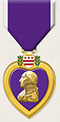
Leo Lichten was one of those ASTP guys. He was buried in Margraten and found his final resting place in Block E, Row 7, Grave 13. He was posthumously awarded the Purple Heart medal.
His grave has for several years now been adopted by Frans Timmermans, from Heerlen and currently Commissioner of the European Parliament.
Memories
Paul Slater - a WWII war veteran - was a childhood friend of Leo. Some years ago he brought his son Leo (named after Leo Lichten) at the invitation of Frans Timmermans to visit Leo's grave.
Paul remembered Leo as a very exceptional person: intelligent, sporty, noble and brave.
In a letter Leo wrote to Paul in wartime, he wished him strength, encouraged him to continue to believe in his dreams and seemed to intimate that he did not expect to survive the war. He seemed to be at peace with that because he fought for a noble cause, but also, ironically, because he dreaded the prospect of going back to his unhappy family cicumstances, to a mother with whom he had a poor relationship. Leo knew (if you read between the lines) that his short training period as an infantryman had not prepared him well for the fight and that he was only cannon fodder. He was not cynical about it, bur resigned to this fact.
In an autobiographical poem that Paul wrote many years later, he referred to Leo:
One very special friend, Leo,
Was special to all of us: A remarkable intellect, athlete, comrade. With the US at war he
advised me to be cautious about decision that I was contemplating.
Urging me via his Maxim, to: 'let reason be thy master and feeling be thy slave.'
writing. 'caution, es riecht nach Dem Schlechten, the progress of this [European] war is to be
carefully studied.'
Leo, hoping to encourage me to reply more promptly, wrote:
'my thoughts dancing to the fore have left a vacancy
tormented by a curious awe that make reply a remedy.'
Fields of Honor Database
Literatuur
- “The 84th Infantry Division in The Battle of Germany, November 1944-May 1945”. Door Lt. Theodore Draper. The Viking Press New York.
- “Fortune Favored the Brave. A History of the 334th Infantry, 84th Division”. By Perry S. Wolf. Mannheimer Grossdruckerei, augustus 1945.
- “The battle of the Roer triangle, the German bridgehead between Maas and Roer, sept. 1944-januari 1945”. By P.J.H. Baghus. (Van Gorcum/Assen/1981).
- “De slag om Geilenkirchen”, (The battle of Geilenkirchen) by Karel Margry in "tijdschrift ’40-45, toen & nu, nr 140.
Images




Video's
- Army Historical Report Film #HR-B-29, “American Ninth Army: Aachen to the Roer River” "from 18:28 to 22:20: American news item on teh battle of Geilenkirchen
- Die Deutche Wochenschau 2.11.1944 #739 on involving statements by German soldiers before the battle of Geilenkirchen. From 04:20 to 06:35: German news about defending Geilenkirchen